As explained in the doc, when staking, the cold-staker can only send to the same P2CS script. That means that the original value of the stake input plus the stake reward of 2 PIV “goes into” a contract, which is exactly the same as the one being spent during the stake (so the cold-staker can keep staking the new utxo, once matured, but only the coin-owner can spend it).
coin-owners receive the whole stake
This is by design.
I don’t want to penalise the coin-owner (lowering the reward for him) because I want to encourage this system.
Ideally, a staker still has to maintain a hot node online for himself, he just keeps the keys offline (coin-owner and cold-staker are primarily supposed to be the same person with two wallets).
The process is similar to what we have with masternodes… do we discourage the hot-cold setup in favor of the “all-in-one” masternode solution? No we do the opposite. We suggest to keep the collateral in a (possibly offline) controller.
On the other hand, I don’t want the cold-staker to have any portion of the block reward because, if cold-staking providers happen to become a reality, I want to keep their profit margins as low as possible (they will have to adopt a “pay in advance” model, like masternode hosting providers do).
I think there are different ways to encourage the use of self-managed cold-stakers:
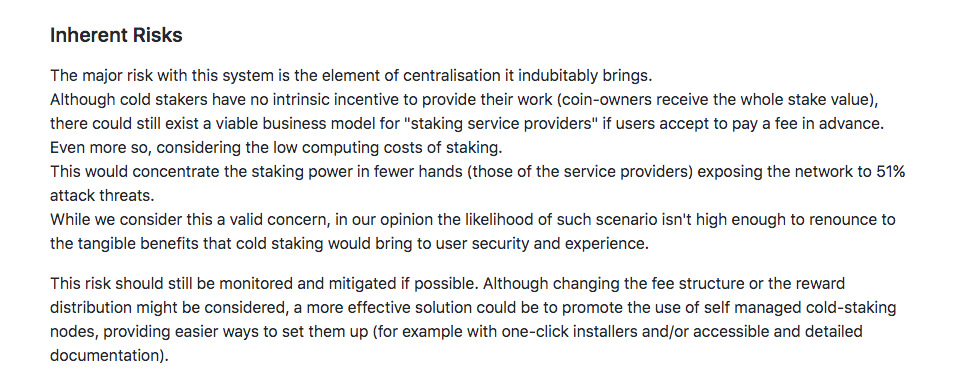
changing the fee structure or the reward distribution might be considered, a more effective solution could be to promote the use of self managed cold-staking nodes, providing easier ways to set them up (for example with one-click installers and/or accessible and detailed documentation).
I do like Eric’s idea of sporks though.
We could introduce one spork to disable the cold-staked blocks (but still allow spending from the coin-owners) for a limited period of time to see how the network responds.
@Cryptosi:
Finally as a privacy concern, would it be possible to have a portion of the stake automatically given to the coinstaker, that way the coin staker doesny need to communicate with the coin owner at all ever. It reduces the need or ability to ever conduct KYC.
Guess that the above answers this question as well.
I'm not sure how this would prevent communication between the actors though, or why KYC would be involved.
@vampyren:
And i dont get the Cons part. How is it different from current system? They cant still stake even today just using a wallet. Dont see a huge different beside convenience.
The staking power is the ability to create new blocks.
When only one entity is able to gain 51% of it, bad things can happen.
It's the same problem as with hash power and mining pools in PoW cryptocurrencies.
With this system you don't transfer the ownership of the coins but you give (possibly to a 3rd party) the staking power that comes with your coins.
So, the risk is that a "cold-staking service provider" might show up and become so popular to be a threat for the network.